Men’s Azimuth 10 on Communication That Builds or Breaks
On March 26, the sixth meeting of the jubilee edition of Men’s Azimuth 10 took place—an international formation series for leaders of men’s initiatives. This session focused on communication, not as a technique, but as one of the deepest dimensions of leadership.
A consistent group of 63 leaders participated, representing a wide range of environments: parish communities, men’s movements, evangelization initiatives, pastoral ministries, and professionals serving as leaders in their workplaces. This diversity is one of the greatest strengths of Men’s Azimuth—it creates a space of encounter, learning, and unity beyond any single formation model.
Communication begins in the heart
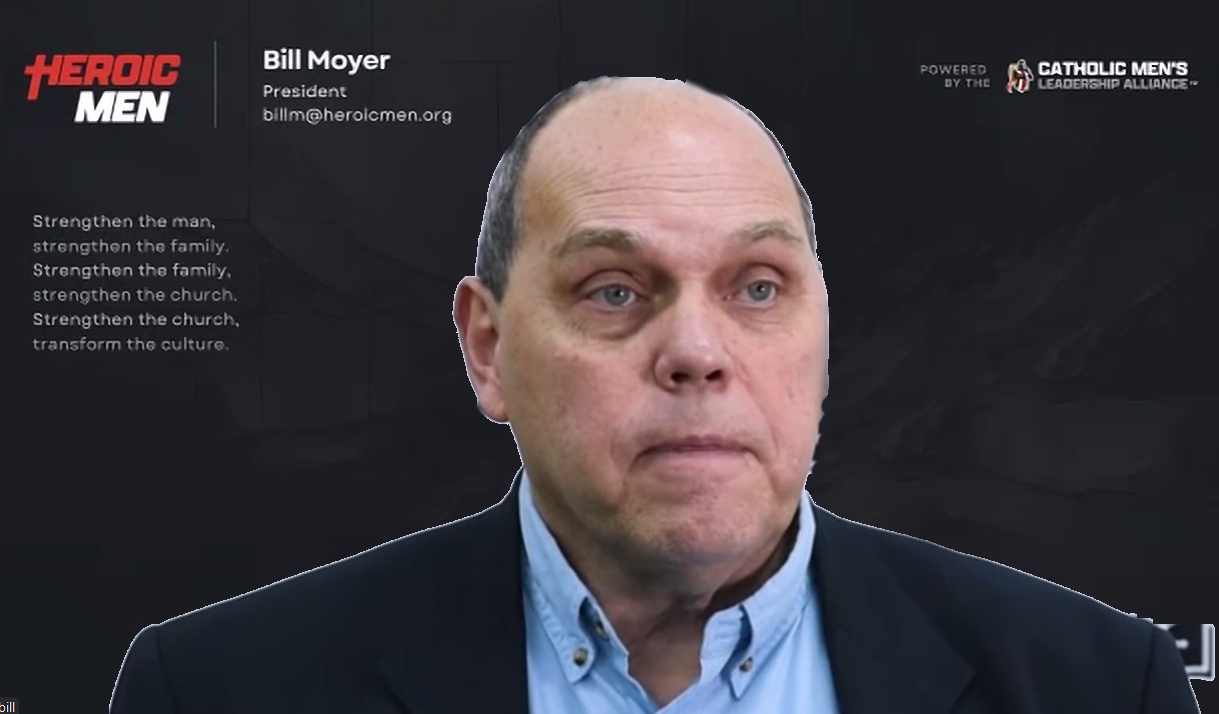
Bill Moyer, leading the session, emphasized a fundamental truth: communication does not begin with words, but with the inner life of the leader. As Jesus teaches, “out of the abundance of the heart the mouth speaks” (Matthew 12:34).
This means that no amount of communication techniques can compensate for a disordered heart. A leader’s words always carry what he truly lives—his words will either build up or wound, give life or destroy.
Communication, therefore, is not merely a skill—it is the fruit of character and values.
First understand, then be understood
One of the strongest points of the meeting was the reminder of a key leadership principle:
“Seek first to understand, then to be understood.”
In a world where everyone wants to speak, the leader is called first to listen. Without this, communication becomes shallow, relationships weaken, and trust erodes.
The session highlighted that:
- a leader who does not listen stops understanding people,
- a leader who does not understand begins to manage rather than lead,
- a leader who loses relationships ultimately loses influence.
True leadership begins with attentiveness to others.
Communication builds—or destroys—community
One of the defining statements of the meeting was:
Your communication will either build trust or destroy it.
The words of a leader shape the environment of a community:
- they can create safety, confidence, and courage,
- or they can produce fear, tension, and distance.
Biblical wisdom reminds us that “the tongue of the wise brings healing,” while careless words wound like a sword. A leader cannot afford to be careless with words—his communication actively shapes people and relationships.
God—the first communicator
The session also revealed a deeper theological truth: God is a communicator.
From the beginning, God has spoken—through prophets, events, relationships, and ultimately through Jesus Christ. Communication is not an accessory to leadership; it is at its very core.
If a leader wants to lead well, he must learn from God:
- God communicates within relationship,
- God communicates consistently with His character,
- God communicates in many ways,
- God communicates continually and faithfully.
This becomes the model for every leader.
The four stages of communication – the example of Nathan
A particularly practical part of the teaching focused on the encounter between the prophet Nathan and King David (2 Samuel 12). It revealed communication not only as truth-telling, but as a process leading to transformation.
Four stages of effective communication were identified:
- Relationship – communication always happens within a relationship
- Preparation – how the message is delivered matters
- Confrontation – truth must be spoken clearly
- Restoration – the goal is rebuilding, not destruction
This shows that leadership communication is not about “getting something off your chest,” but about taking responsibility for the other person.
Not speaking—but being understood
A crucial insight of the meeting was this:
Communication does not happen when someone speaks and someone listens—but when understanding is achieved.
A leader may speak clearly and correctly, yet still fail to communicate. Without understanding, communication has not truly taken place.
This calls leaders to a deeper responsibility:
- for how they speak,
- for the context they create,
- for the relationship they build,
- and for the impact their words have.
The journey of Men’s Azimuth
The sixth meeting revealed how coherent and intentional the entire journey of Men’s Azimuth 10 is:
- from the character of the leader,
- through dependence on God,
- integrity and values,
- vision,
- to communication, which carries that vision to others.
This is not a course in techniques. It is a formation journey—from the inner life of the leader toward responsible action.
Two key steps remain:
- leadership exercised with humility in authority and influence,
- and the final leaders’ retreat in Tyniec (May 15–17), focusing on relationships, collaboration, and mentoring.
This is the last moment to join
If you are a leader, an animator, or involved in any men’s initiative—this is the last moment to join this journey.
Men’s Azimuth 10 is not a project of one group. It is a space where leaders from different environments come together to grow, learn, and cooperate.
It is a path for those who:
- want not only to act, but to understand what they are doing,
- want not only to lead, but to lead according to the Gospel,
- want not to compete, but to build unity and collaboration.
Join now—before the journey culminates in the leaders’ weekend in Tyniec.